
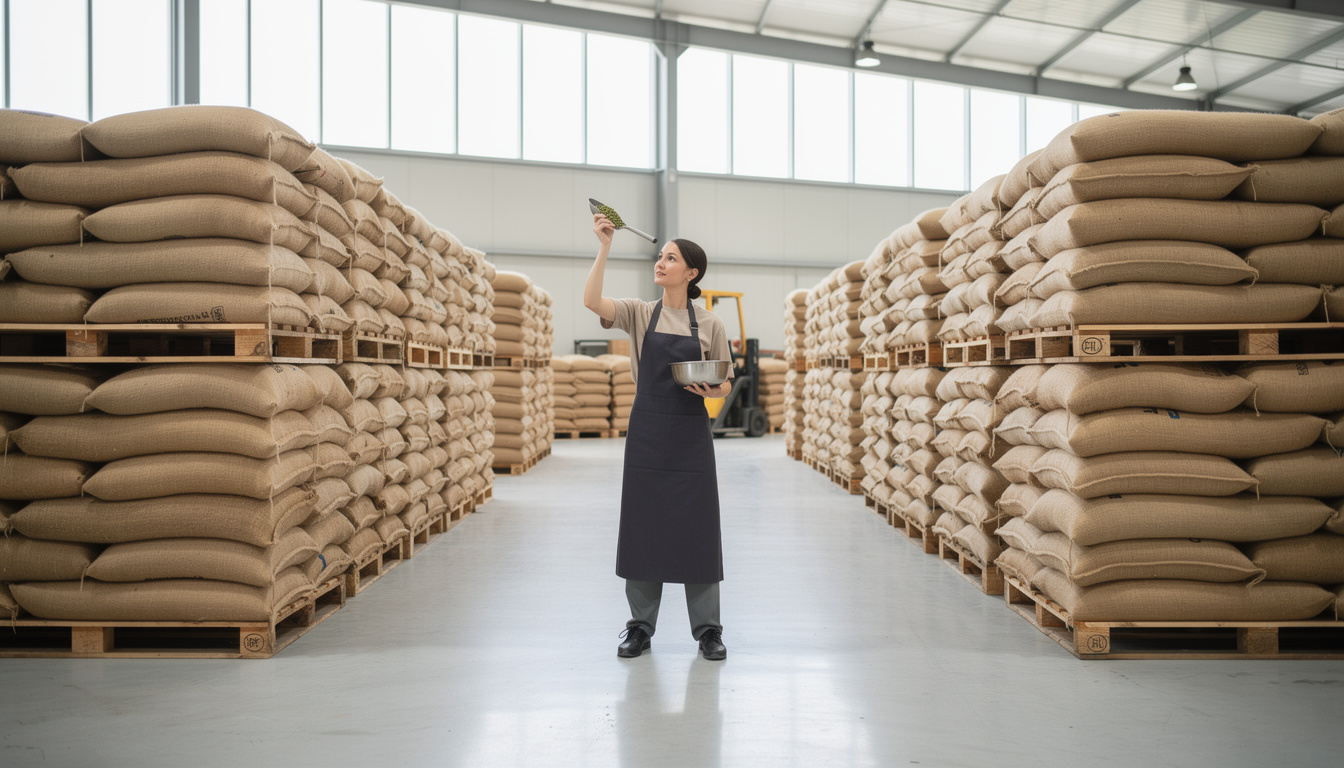
How to Choose a Specialty Coffee Importer for Bulk Sourcing comes down to five checks: quality control systems, origin transparency, landed-cost structure, contractual protection, and logistical reliability. For wholesale buyers, a weakness in any one of these areas in bulk green coffee sourcing usually shows up later as inconsistent cups or unexpected invoices. The sections below cover evaluation criteria, sample verification, quote comparison, inventory planning, and risk mitigation for roasters buying specialty coffee and green coffee at volume.
Aligning Importer Capabilities with Quality, Volume, and Direct Sourcing Trade-Offs
Core Selection Criteria and Quality Systems
Wholesale buyers start with fit: target flavor profile, roast consistency goals, and annual volume projected in metric tons. Minimum order quantities, a distribution warehouse within a few hundred kilometers of the roastery, and room to scale a growing program come next. Documented quality assurance, such as lot-level cupping records and retained samples, separates a serious importer from a broker. Experienced importers support consistent wholesale programs by holding the same standards across their specialty coffee offerings, so the records behind a lot matter as much as the cup.
Importer Sourcing Versus Direct Producer Relationships
Buying directly from producers demands upfront capital, in-house freight and customs handling, and absorption of every risk, from rejected lots to delayed vessels. It also adds relationship overhead across many farms. Importers consolidate shipments, offer flexible payment terms, and provide multi-origin green coffee through a single account. Direct sourcing becomes workable when a roaster buys several full containers a year, employs dedicated logistics staff, and can leave cash tied up for months. Most mid-sized and large roasters keep an importer at the center of bulk green coffee sourcing because of that gap.
Where Origin Traceability Breaks Down at Bulk Scale
Preserving Lot Integrity Across Producers and Mills
Origin traceability is audited through chain-of-custody records that name the farm or cooperative, the region, and the processing facility. At bulk scale the weak points are unapproved blending, multi-lot consolidation, container relabeling, and partial lot substitution. Each produces cup profiles that drift from the approved sample and marketing claims that cannot be proven. Strict lot separation prevents this. Smallholder producers deliver cherry to a cooperative mill, where wet mill and dry mill stages are logged separately, so a microlot keeps its identity from farm to export bag.
Import Documentation, Certifications, and Compliance Verification
Organic or fair-trade claims need certificates tied to the specific lots shipped, not to the importer in general. Standardized trade records provide the baseline, and Certificates of Origin issued under International Coffee Organization rules verify provenance and export quality for cross-border shipments. Customs clearance documentation must also satisfy Israeli import requirements, including accurate product descriptions, origin declarations, and food-handling records at the receiving warehouse.
Verifying Green Coffee Quality Through Samples and Physical Metrics
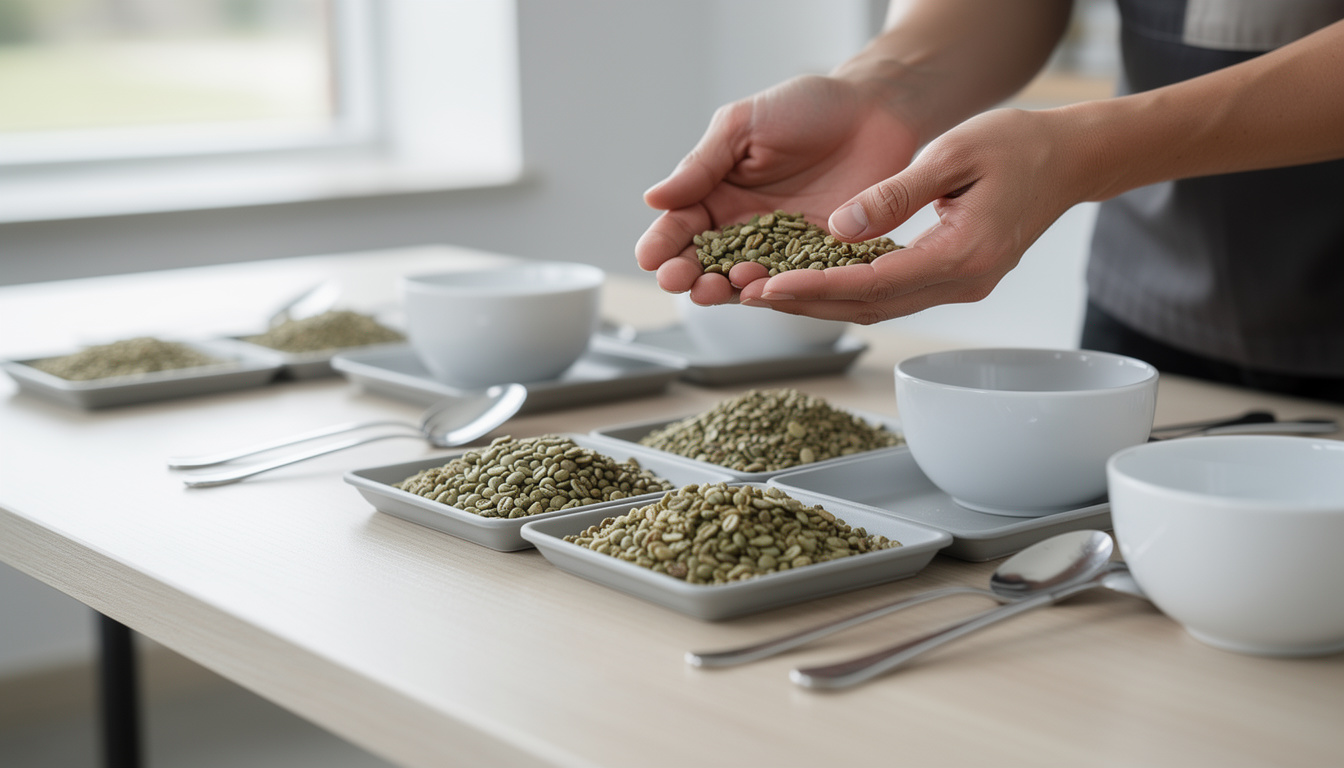
Sampling runs in three stages: offer samples for initial selection, pre-shipment samples drawn before export, and arrival samples pulled at the destination warehouse. Representativeness depends on drawing from multiple bags across the lot rather than a single convenient sack. Each stage is scored under a standardized cupping protocol covering cleanliness, sweetness, acidity, and flavor alignment, and sample approval is recorded in writing as the reference for the contract.
Physical limits are also fixed in writing before purchase. The ICO export quality benchmarks referenced above serve as an objective baseline for defect and moisture limits.
| Parameter | Typical reference | Grounds for a claim |
|---|---|---|
| Moisture content | 10 to 12 percent | Readings above the agreed ceiling |
| Water activity | Roughly 0.55 to 0.65 | Repeated readings above the upper limit |
| Defect count per 300 grams | Primary and secondary limits written into the contract | Counts exceeding contract limits |
| Screen size | Agreed grade, expressed in millimeters | Out-of-grade share beyond tolerance |
| Cup quality | Matches the approved pre-shipment sample | Taints or a clear gap from the sample |
Comparing Bulk Pricing Quotes and Structuring Importer Contracts
A headline price per kilogram misleads when freight, insurance, warehousing, financing charges, port handling, and clearance fees are bundled differently. A fair comparison normalizes every quote to the same delivery terms, currency, bag weight (60 kilograms or 69 kilograms, jute or hermetic), and storage duration. The Incoterms® 2020 rules from the International Chamber of Commerce standardize who handles freight, who carries risk, and who pays insurance and import duties. Incoterms (FOB, CIF, DDP) divide these duties very differently: FOB leaves ocean freight and insurance with the buyer, CIF includes both up to the destination port, and DDP places duties and delivery on the seller.
The purchase agreement then locks the terms in. It defines sensory and physical tolerances, prohibits unauthorized lot substitution, and sets out force majeure, inspection and claims windows, title and risk transfer points, payment schedules, and dispute resolution.
When a Contract Is Signed Before the Harvest: Lead Times and Inventory Commitments
Between signature and roastery delivery, a lot passes through origin milling, export preparation, ocean freight, port clearance, and inland transfer. The whole chain often takes several months. The harvest calendar matters here, because northern and southern hemisphere producers ship at different times of the crop year, and fresh-crop surges can congest ports and delay releases.
Spot inventory offers immediate availability and a known cup, but at current market prices and with the importer's storage costs built in. A forward contract fixes price and secures a specific lot, but it ties up working capital and carries storage risk until arrival. Roasters usually match forward volumes to predictable seasonal demand and cover the remainder from spot stock. This avoids stockouts as well as overbuying that leaves green beans stale.
Due Diligence Questions and Risk Control in Bulk Logistics
Pre-Order Due Diligence Questions
Before a first order, buyers typically ask about the importer's sourcing relationships and how origin traceability is evidenced at lot level. Other questions cover warehouse capacity and location, standard lead times, how sample approval is recorded, and which defect count triggers a claim and how quickly it is settled. Buyers also ask which customs clearance documentation accompanies each shipment and how often account managers report on open orders. Consistent, specific answers indicate maturity in bulk green coffee sourcing.
Mitigating Transit, Storage, and Quality Drift Risks
Container condensation encourages mold and off-flavors. Long port dwell times and ambient heat flatten cup quality, humidity spikes in warehouses damage stored bags, and paperwork errors generate storage fees and delays. Controls include hermetic grain liners, climate-controlled storage kept below 25 degrees Celsius with stable, moderate relative humidity, and marine cargo insurance. A documented escalation protocol with defined response times completes the set.
What volume justifies working with an importer?
No fixed threshold exists. Importers serve roasters from partial-container programs upward, because consolidated shipments and local stock reduce the burden of freight and customs handling.
Is a pre-shipment sample needed if the offer sample was approved?
Yes. The offer sample may come from a different part of the lot, so a pre-shipment sample confirms that the cargo actually matches what was approved.
Which Incoterm suits a first bulk order?
FOB gives the most control and the lowest quoted price but demands freight and insurance expertise. CIF and DDP shift more responsibility to the seller at a higher price.
About the Business
VOYA Specialty Coffee is a professional importer and wholesaler that supplies specialty green and roasted coffee beans in bulk to coffee roasters, cafes, and other businesses. The company is committed to sourcing exceptional coffees and helping its clients elevate their offerings.